
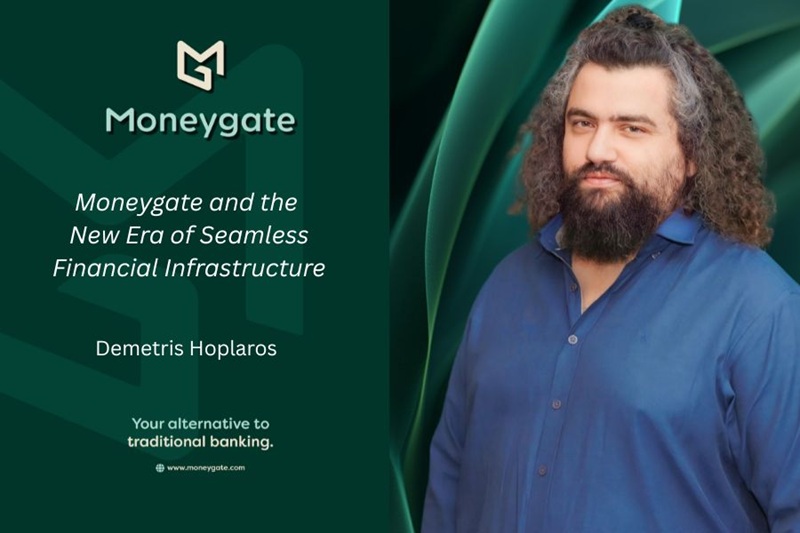
Moneygate and the new era of seamless financial infrastructure
Capital must move as intelligently as data. Why cross-border treasury is consolidating into unified, API-driven environments.
In today's global economy, the speed at which capital moves often determines the speed at which businesses grow. For decades, cross-border payments and treasury management were treated as a series of disconnected financial events: payments processed through different banks, currencies managed in separate accounts, compliance checks carried out at multiple stages, settlement delayed by fragmented systems. That model is rapidly becoming obsolete.
A new reality for global businesses
Treasury teams have traditionally juggled accounts across jurisdictions, reconciled transactions across multiple systems and dealt with unpredictable settlement times. As businesses become more global and digital-first, that complexity becomes unsustainable.
The emerging expectation is financial infrastructure that consolidates multi-currency operations into unified digital environments: deploy accounts quickly, collect and send payments internationally, manage liquidity in real time. When businesses manage capital flows across jurisdictions through a single interface, they gain greater visibility, better control and faster decision-making.
Finance as an integrated layer of technology
Historically, financial tools existed as standalone systems, with accounting, ERP and treasury operating separately from the institutions processing payments. That separation is disappearing. Modern financial services are evolving toward an API-driven model in which payment capabilities integrate directly into the software environments companies already use, automating treasury operations, synchronising financial data and executing large-scale transactions without manual intervention.
Compliance as a competitive advantage
Compliance was long perceived as an obstacle to speed. Increasingly it is embedded directly into digital systems, so regulatory checks and risk monitoring happen automatically in the background. Automated risk assessment, digital identity verification and real-time transaction monitoring allow institutions to maintain rigorous standards while supporting seamless client experiences.
At Moneygate, compliance is treated not as a constraint, but as a core element of the architecture that supports our services.
The infrastructure behind the next phase of growth
Companies expanding into new markets, managing international suppliers or operating digital platforms across multiple jurisdictions require financial systems capable of supporting that complexity. The ability to move capital seamlessly, securely and transparently is increasingly a prerequisite for growth.